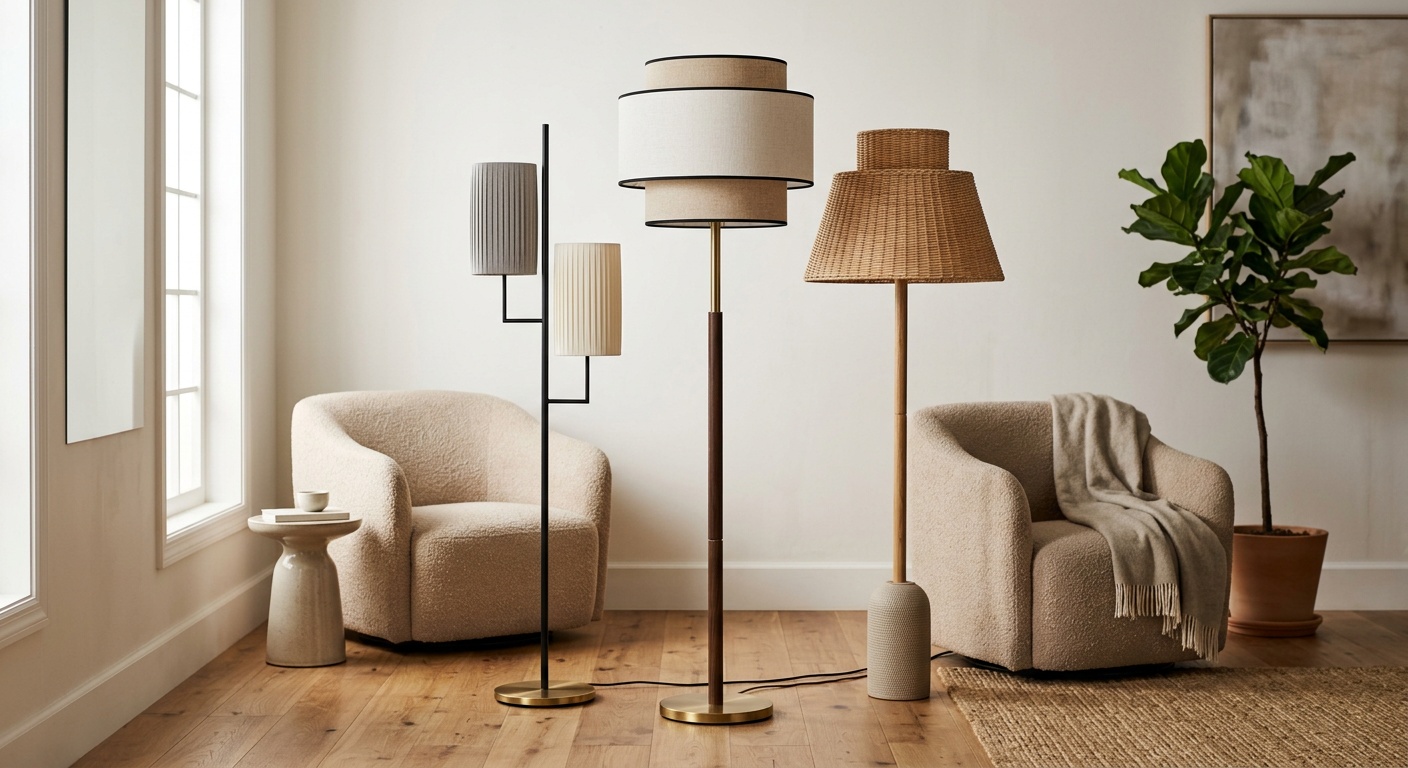
Layered Lighting Design Ideas That Transform Every Living Room
Reading time: 12 minutes
Ever walked into a living room and felt instantly at ease — warm, welcomed, and somehow energized — without knowing exactly why? Chances are, the lighting was doing all the heavy lifting. Layered lighting is the interior design secret that separates spaces that merely function from rooms that truly feel alive.
Here’s the straight talk: Most homeowners spend thousands on furniture and décor, then ruin everything with a single overhead bulb. Lighting isn’t just a utility — it’s the invisible architecture of your space. In 2026, with smart home technology now deeply embedded in everyday life and sustainable design at the forefront of renovation trends, getting your lighting layers right has never been more achievable — or more impactful.
Whether you’re redesigning a compact apartment living room or overhauling a sprawling open-plan family space, this guide walks you through every layer, every decision, and every practical step you need to create a living room that genuinely transforms under your control.
Table of Contents
- What Is Layered Lighting (and Why Does It Matter)?
- The Three Core Layers Every Living Room Needs
- Accent and Decorative Lighting: The Detail That Makes the Difference
- Smart Lighting in 2026: Technology That Works for You
- 3 Common Layered Lighting Mistakes and How to Fix Them
- Real-Room Scenarios: Layered Lighting in Action
- Comparing Lighting Layer Options
- Living Room Lighting Impact: What Homeowners Report
- Frequently Asked Questions
- Your Layered Lighting Roadmap: Light It Up
What Is Layered Lighting (and Why Does It Matter)?
Layered lighting is the deliberate practice of combining multiple light sources at different intensities, heights, and angles within a single room to create depth, flexibility, and atmosphere. Rather than relying on one dominant fixture to illuminate everything, you’re building a system of light that can be adjusted for every occasion — from bright Sunday morning reading to intimate Friday evening gatherings.
According to a 2025 survey by the American Lighting Association, 74% of homeowners who redesigned their living room lighting reported a significant improvement in how comfortable and functional their space felt — even without changing any furniture. That’s a remarkable return on investment for what is often considered a “finishing touch.”
Interior designer and lighting specialist Clara Houten, whose work has been featured in Architectural Digest through 2025 and 2026, puts it plainly: “Light is the most underestimated design tool in residential spaces. When I layer lighting correctly, clients often tell me the room feels bigger, warmer, and more intentional — without moving a single piece of furniture.”
The concept itself isn’t new, but what is new in 2026 is how accessible layered lighting has become. Smart bulbs, voice-controlled dimmers, color-temperature-adjustable LEDs, and app-based scene presets mean that what once required an electrician and a significant renovation budget can now often be achieved with well-chosen fixtures and a Wi-Fi connection.
The Three Core Layers Every Living Room Needs
Think of lighting in three essential tiers. Each serves a distinct purpose, and together they create a room that’s both beautiful and deeply practical.
Layer 1: Ambient Lighting — Your Foundation
Ambient lighting is your room’s baseline illumination. It’s the general, diffused light that makes a space navigable and comfortable without harsh shadows or bright spots. In most living rooms, ambient light comes from:
- Recessed ceiling fixtures (downlights) — ideal for clean, modern aesthetics
- Central pendant lights or chandeliers — statement pieces that also function as primary light sources
- Flush-mount ceiling fixtures — practical for rooms with lower ceilings
- Cove lighting — hidden LED strips that wash light upward along wall-ceiling edges
The critical mistake most people make with ambient lighting is making it too bright and non-dimmable. Your ambient layer should be the starting point — never the entire story. A dimmer switch on your ambient source is non-negotiable if you want flexibility. In 2026, smart dimmers that integrate with platforms like Google Home, Amazon Alexa, and Apple HomeKit are available for as little as $25–$45 per unit, making this upgrade both affordable and impactful.
Pro Tip: Aim for an ambient light level of around 150–300 lumens per square meter in a living room. This is bright enough for general activity but low enough to allow task and accent lighting to work effectively alongside it.
Layer 2: Task Lighting — Purposeful Illumination
Task lighting targets specific activities — reading, working, crafting, or playing games. It’s directional, focused, and typically more intense than ambient light in its zone. In a living room context, task lighting includes:
- Floor lamps positioned beside reading chairs
- Table lamps flanking a sofa
- Adjustable swing-arm wall sconces
- Integrated shelf lighting for workspace corners
The beauty of task lighting is its dual role: it solves a practical problem and contributes to the room’s visual layering. A well-placed floor lamp beside an armchair doesn’t just help you read — it creates a warm, intimate glow that softens the room’s atmosphere after dark.
When selecting task lighting, consider color temperature. For reading and focused activities, aim for bulbs in the 3000K–4000K range (warm white to neutral white). Avoid bulbs over 5000K (daylight) in living areas — they can feel clinical and harsh in the evening.
Layer 3: Accent Lighting — Drama and Depth
Accent lighting is where design truly comes alive. Its purpose is to highlight architectural features, artwork, textures, plants, and objects that deserve visual attention. Unlike ambient and task lighting, accent lighting is not about visibility — it’s about storytelling.
Common accent lighting strategies include:
- Picture lights mounted above framed artwork
- Directional spotlights aimed at a feature wall or fireplace
- LED strip lighting underneath floating shelves or media units
- Uplighting behind large indoor plants to create dramatic leaf-shadow patterns
- Backlit panels on feature walls for a contemporary sculptural effect
Accent lighting should deliver approximately 3–5 times more light than the ambient level in the area it’s highlighting. This contrast is what creates the perception of depth and draws the eye intentionally around the room.
Accent and Decorative Lighting: The Detail That Makes the Difference
While accent lighting serves a defined structural role, decorative lighting exists primarily as a visual statement. Think of Edison bulb pendants, sculptural table lamps with unique shades, neon signs, illuminated bookshelves, or Moroccan lanterns. These fixtures are the jewelry of your lighting design — they may not illuminate much, but they communicate style, personality, and warmth.
In 2026, biophilic lighting design — integrating light in ways that mimic natural patterns — has become one of the dominant trends in residential interiors. Fixtures that replicate dappled sunlight through a tree canopy, or LED systems that gradually shift from cool morning whites to warm evening ambers throughout the day, are increasingly accessible through brands like Philips Hue, LIFX, and Nanoleaf.
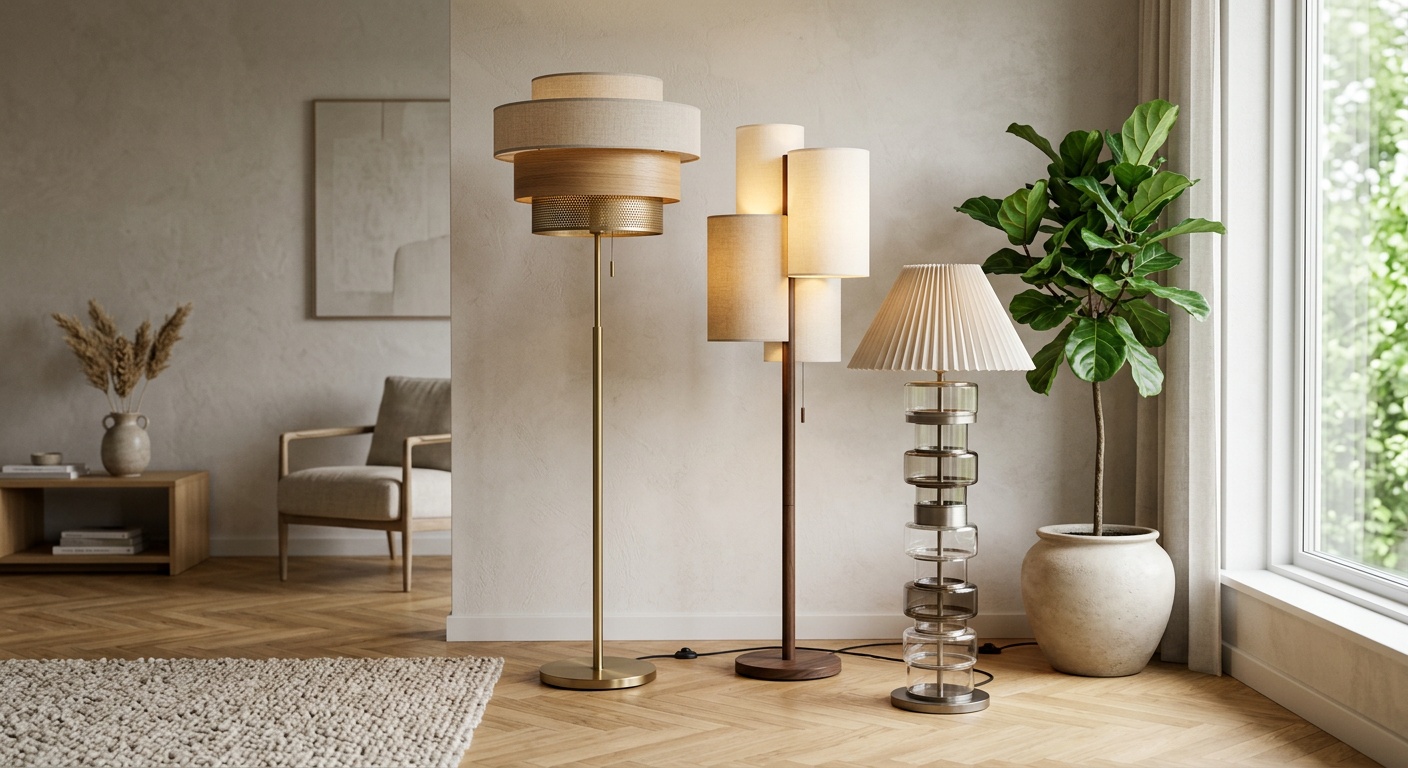
A design principle worth memorizing: Every room needs at least one lighting element that surprises. It doesn’t need to be expensive — a string of warm bistro lights draped across a bookshelf, or a single sculptural floor lamp in a corner, can shift a room from ordinary to extraordinary.
Smart Lighting in 2026: Technology That Works for You
Smart lighting has moved well beyond novelty. As of 2026, approximately 62% of newly renovated homes in North America and Western Europe incorporate some form of smart lighting control, according to data from Statista’s Smart Home Report 2025. The technology has matured significantly — installation is simpler, compatibility across ecosystems is better, and the cost has dropped dramatically.
Here’s what smart lighting realistically offers for layered living room design:
- Scene presets — program specific combinations of lights, dimness levels, and color temperatures for “Movie Night,” “Morning Energize,” or “Dinner Party” modes
- Circadian rhythm support — automatic color temperature shifts that align with natural daylight cycles, supporting better sleep and alertness
- Voice and app control — adjust any layer independently without getting up
- Motion-triggered activation — lights that come on gently when you enter the room and dim when you leave
- Energy monitoring — real-time tracking of electricity usage across fixtures
The most practical entry point in 2026 is a starter kit approach: begin with smart bulbs in your two or three most-used fixtures, connect them to a hub or ecosystem you already use, and expand over time. You do not need to automate everything at once. The biggest impact typically comes from dimmer control on your ambient layer and scene-setting capability on your accent and task layers.
3 Common Layered Lighting Mistakes and How to Fix Them
Mistake 1: Relying Solely on Overhead Lighting
This is the most widespread lighting error in residential design. A single central ceiling fixture, no matter how beautiful, creates flat, shadowless illumination that makes a room feel like a waiting room. Fix it by introducing at least two additional light sources at different heights — a floor lamp and a table lamp are the fastest interventions. Vary the heights deliberately: floor lamps at around 150–180cm, table lamps at 60–90cm, and accent lighting closer to the floor or at ceiling edges.
Mistake 2: Ignoring Color Temperature Consistency
Mixing warm bulbs (2700K) with cool bulbs (5000K) in the same room creates visual dissonance that people often feel without being able to name. It makes spaces look unintentional rather than designed. Fix it by choosing a dominant color temperature for your living room — for most residential spaces, 2700K–3000K (warm white) is the recommended range — and sticking to it across all layers. Use slightly cooler temperatures only in task lighting where needed.
Mistake 3: Forgetting About Dimmers
A beautifully layered lighting plan is only as good as its flexibility. Without dimmers, you’re locked into a single intensity for each fixture — which defeats the purpose of layering entirely. Fix it by installing dimmers on at least your ambient and task layers. In 2026, retrofit dimmer switches and smart dimmer plugs make this upgrade possible even in rental apartments without permanent electrical modifications, starting at under $30.
Real-Room Scenarios: Layered Lighting in Action
Scenario 1 — The Open-Plan City Apartment: Maya, a 34-year-old architect living in a 65-square-meter Toronto apartment, felt her open-plan living-dining space always looked flat and undefined. By installing recessed downlights on a dimmer circuit for ambient light, adding a large arc floor lamp beside her reading chair for task lighting, tucking LED strips under her floating media unit for accent warmth, and placing a sculptural pendant above her coffee table as a decorative focal point, she created four distinct lighting zones — without a single structural change. The result: the living and dining areas now feel like separate “rooms” even though they share one open space.
Scenario 2 — The Suburban Family Room: The Hendersons, a family of four in suburban Melbourne, needed a living room that could shift from homework-friendly afternoon brightness to cozy movie-night ambiance with minimum effort. They installed smart recessed lighting on a scene-control system, two table lamps with warm-toned shades flanking the sofa, LED strip lighting behind the television to reduce eye strain during screen time, and a statement chandelier on a separate smart dimmer. By 2025, their most-used scene presets — “Homework,” “Movie Night,” and “Entertaining” — had saved them an estimated 18% on electricity compared to their previous single-fixture setup.
Comparing Lighting Layer Options
| Lighting Type | Primary Purpose | Avg. Cost (2026) | Smart Compatibility | Design Impact |
|---|---|---|---|---|
| Recessed Downlights | Ambient base layer | $20–$60/unit | High | Clean, modern, unobtrusive |
| Floor Lamps | Task + ambient supplement | $50–$300 | Medium (via smart plug) | Warm, sculptural, flexible |
| LED Strip Lighting | Accent + atmosphere | $15–$80/reel | Very High | Dramatic, versatile, modern |
| Pendant / Chandelier | Ambient + decorative focal point | $80–$800+ | High | Statement, architectural, bold |
| Table Lamps | Task + decorative warmth | $30–$200 | Medium (via smart bulb) | Intimate, approachable, cozy |
Living Room Lighting Impact: What Homeowners Report
The following data, drawn from a combined 2025 survey of 1,200 homeowners across the US, UK, and Australia, shows self-reported improvements after implementing layered lighting design:
Source: Combined homeowner survey, US/UK/Australia, 2025 (n=1,200). Respondents who implemented full layered lighting redesign.
Practical Design Principles Worth Internalizing
Beyond the three core layers, experienced lighting designers use a handful of principles that consistently elevate results. Here are the most transferable for DIY renovators in 2026:
The Rule of Odd Numbers
Interior designers frequently work with odd numbers — three lamps, five accent points, seven spots of interest. Odd groupings feel more natural and dynamic than even arrangements. When placing table lamps, sconces, or accent pieces, lean into three-point lighting configurations: place light sources in a loose triangular pattern around the room to ensure balanced coverage without visual symmetry that can feel sterile.
Height Variety Is Non-Negotiable
A room lit entirely at ceiling height feels institutional. A room lit entirely at table height feels claustrophobic. The magic lies in distributing light across all three height zones: ceiling level (downlights, pendants, chandeliers), mid-level (sconces, table lamps, adjustable floor lamps), and low-level (floor-grazing uplights, shelf underlighting, decorative candles). This vertical spread is what creates the rich, layered look that distinguishes designed spaces from default ones.
Natural Light Is Your First Layer
Before planning any artificial lighting, map your room’s natural light behavior throughout the day. Where does morning sun enter? Which wall is in shadow by 3pm? Which corner gets no direct light at any time of year? Your artificial lighting strategy should complement and extend natural light patterns — not fight against them. Rooms with strong natural light from the east benefit from warm, low-intensity ambient lighting for evenings. Rooms with limited natural light need more deliberate ambient uplighting and reflective surfaces (mirrors, glossy finishes) to maximize the light you introduce.
Switching and Control Zones Matter Enormously
The most beautifully designed lighting scheme fails in practice if it requires adjusting six individual switches to achieve a desired mood. Plan your control zones early: group fixtures by atmosphere rather than by type. Your “evening relaxation” zone might include dimmed ambient lights, a warm floor lamp, and soft LED strips — all on the same smart scene. Your “active daytime” zone might include brighter ambient and task lighting. Investing in a basic smart lighting hub like Philips Hue Bridge, Caséta by Lutron, or integrating through Google Home makes this effortless to manage.
Frequently Asked Questions
How many light sources do I need for a well-layered living room?
There’s no single correct number, but most interior lighting specialists recommend a minimum of four to six distinct light sources in an average-sized living room (approximately 20–30 square meters). This typically means one primary ambient source, two task lights, one to two accent lights, and one decorative element. Larger or open-plan rooms may need eight or more. The key metric isn’t quantity — it’s whether you can create at least three meaningfully different atmospheres with your existing setup: bright and functional, warm and relaxed, and intimate and dramatic.
What’s the best color temperature for living room lighting in 2026?
For living rooms, the widely recommended range is 2700K to 3000K (warm white), which replicates the quality of incandescent light and creates a welcoming, comfortable atmosphere. For task-specific areas like a reading corner or workspace nook within the living room, you can go up to 3500K–4000K (neutral white) without disrupting the overall room mood, provided the task light is directional rather than diffused. Avoid daylight-spectrum bulbs (5000K+) in living areas entirely — they’re appropriate for kitchens and bathrooms but feel harsh and clinical in spaces designed for relaxation.
Can I implement layered lighting without major electrical work?
Absolutely — and this is one of the most encouraging realities of lighting design in 2026. The vast majority of layered lighting improvements can be achieved through plug-in fixtures: floor lamps, table lamps, plug-in sconces, smart plug-connected LED strips, and battery-powered picture lights. Smart bulbs with built-in dimming capability can replace standard bulbs in existing fixtures, and app-based control means you can program scenes without any hardwiring. The only scenario that typically requires an electrician is installing new recessed ceiling fixtures — everything else can be accomplished without touching a wire, making it entirely renter-friendly.
Your Layered Lighting Roadmap: Light It Up
You now have a working blueprint for transforming your living room from a single-note space into a dynamically lit environment that adapts to your life. Here’s how to move forward with confidence:
- Audit your current setup. Walk through your living room at three times of day — morning, afternoon, and evening. Note where shadows fall, where it feels flat, and which activities are poorly served by existing light.
- Identify your missing layers. Most rooms have ambient light covered but lack intentional task and accent lighting. Start with whichever layer is most absent — often a single well-placed floor lamp has the most immediate impact.
- Standardize your color temperature. Replace any mismatched bulbs with a consistent 2700K–3000K tone across all fixtures. This single change costs under $30 and immediately makes a room feel more designed.
- Add dimmers to your ambient source. Whether a smart dimmer switch or a smart bulb with app control, this unlocks the flexibility your layered scheme needs to function properly.
- Introduce one accent or decorative element. Pick one feature in your room worth highlighting — a piece of art, a bookshelf, a plant, a fireplace surround — and add a focused light source to draw attention to it. Experience the immediate transformation this creates before investing further.
As smart home ecosystems continue to mature through 2026 and beyond, the boundary between lighting design, wellness technology, and personalized home environments will only continue to blur. Circadian lighting systems that support your sleep, productivity, and mood are no longer the domain of luxury hotels — they’re within reach for any living room, at any budget.
Here’s the question worth sitting with: What does your ideal living room feel like at 8pm on a Tuesday — and does your current lighting actually deliver that? If the answer is anything less than “yes,” your lighting layers are waiting to be redesigned. The transformation isn’t as far away as you think.
About the Author
