Mid Century Modern Home Renovation Ideas for a Timeless Interior
Reading time: 14 minutes
There’s something almost magnetic about mid century modern design. You’ve probably seen it — those clean lines, the warm wood tones, the furniture that somehow looks like it belongs in both 1958 and 2026. If you’ve ever walked into a well-executed MCM home and thought, “I want this feeling in my own space,” you’re in very good company.
Mid century modern renovation isn’t just a trend — it’s a design philosophy rooted in function, beauty, and a deep respect for materials. And in 2026, it’s more relevant than ever. According to the 2026 Houzz Home Design Report, MCM aesthetics rank among the top three most searched renovation styles globally, with a 34% year-over-year increase in homeowners seeking MCM-specific contractors and materials.
But here’s the honest truth: renovating in MCM style is as much about discipline as it is about inspiration. Get it right, and you’ll have a home that feels effortlessly sophisticated. Get it wrong, and you’ll end up with a space that feels like a costume rather than a home.
This guide will walk you through the essential strategies, room-by-room ideas, material choices, and common pitfalls — so you can transform your home with intention and clarity.
Table of Contents
- What Makes Mid Century Modern Design So Enduring?
- The Core Design Principles You Must Know
- Room-by-Room Renovation Strategies
- Choosing the Right Materials and Finishes
- 3 Common MCM Renovation Mistakes (And How to Avoid Them)
- Real Renovation Examples: What Actually Works
- Cost Comparison: MCM vs. Contemporary Renovation
- Design Popularity: 2026 MCM Renovation Trends
- Frequently Asked Questions
- Your MCM Renovation Roadmap: Where to Begin
What Makes Mid Century Modern Design So Enduring?
Mid century modern design emerged predominantly between the 1940s and 1970s, shaped by architects and designers like Eero Saarinen, Charles and Ray Eames, and Richard Neutra. But calling it a “period style” undersells its staying power. Unlike Victorian or Art Deco aesthetics that feel firmly anchored in their eras, MCM has a strange timelessness — it breathes equally well in a 1962 ranch house and a newly built 2026 urban townhome.
Why? Because MCM is fundamentally about solving problems beautifully. It emerged during a post-war optimism that prioritized accessible, functional, democratically designed spaces. That philosophy doesn’t age. Clean lines reduce visual clutter. Natural materials age gracefully. Open floor plans support modern life. These aren’t nostalgic preferences — they’re practical ones.
In 2026, with many homeowners pushing back against maximalist interiors and ultra-minimalist cold aesthetics, MCM occupies a warm, grounded middle ground. It’s sophisticated without being sterile. Warm without being cluttered. That balance is exactly what makes it so compelling for renovators today.
The Core Design Principles You Must Know
Principle 1: Form Follows Function — But Never At the Expense of Beauty
The foundational MCM mantra borrowed from modernist architecture is that every design choice should have a purpose. In a renovation context, this means resisting the urge to add decorative elements just because they look interesting. Every furniture piece, fixture, and architectural detail should serve the room’s function while contributing to the overall visual harmony.
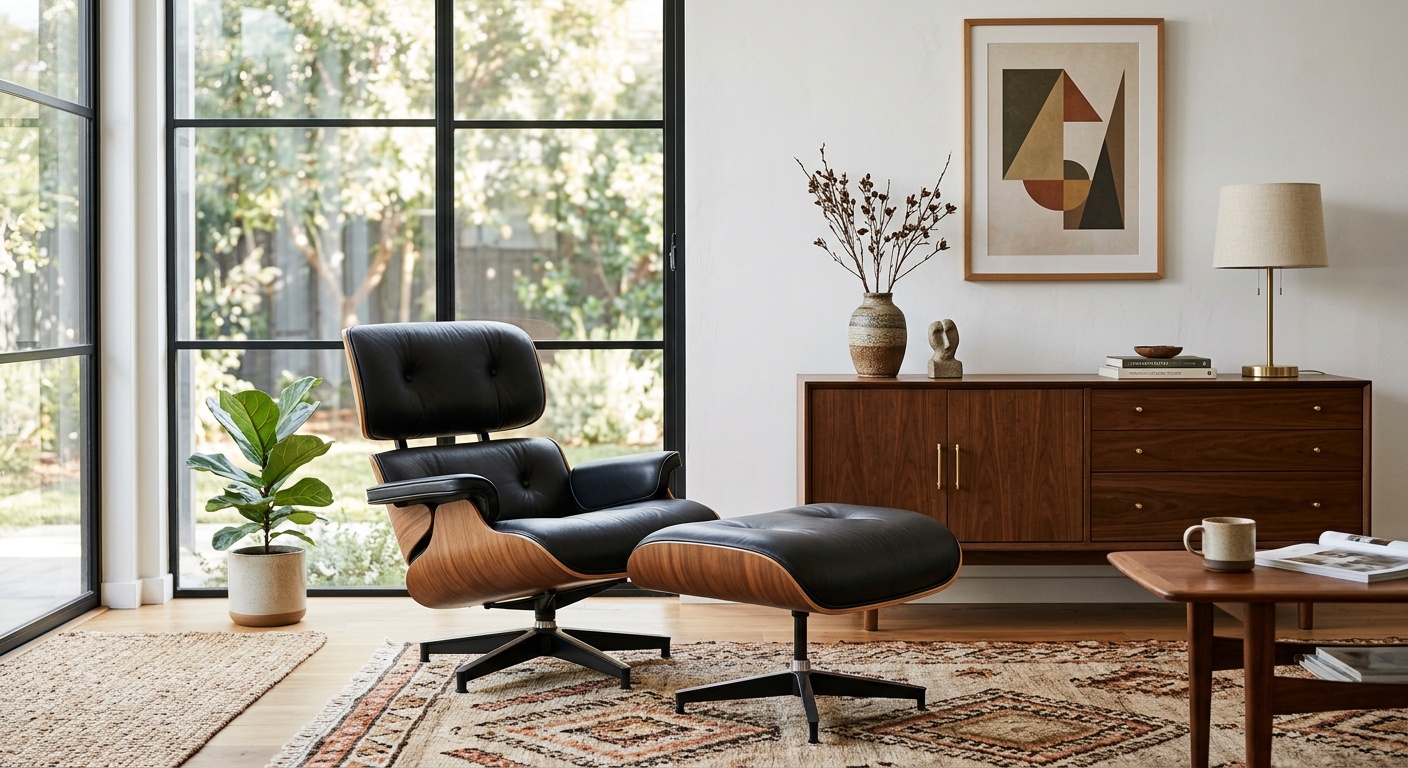
This doesn’t mean sparse or cold. It means deliberate. A walnut credenza against a white wall isn’t just decorative — it provides storage, warmth, and a horizontal line that grounds the room visually. Purpose and beauty coexist.
Principle 2: Organic Meets Geometric
One of the most distinctive MCM traits is the tension — and resolution — between organic curves and geometric precision. Think of the Eames Lounge Chair: its plywood curves are simultaneously structural and sensual. In renovation terms, this means pairing angular architecture (think flat rooflines, boxy room structures) with furniture and accessories that introduce softer, organic shapes.
In 2026, this plays out beautifully with the rise of biophilic design integration into MCM spaces — live edge wood accents, curved upholstery, and organic clay pottery alongside crisp geometric tile patterns and linear cabinetry.
Principle 3: Indoor-Outdoor Connection
Original MCM homes — particularly the California ranch and Usonian styles — blurred the line between interior and exterior. Floor-to-ceiling windows, sliding glass doors, and the use of similar materials inside and outside were hallmarks. In your renovation, actively seek opportunities to extend this connection: frame garden views, use exterior stone as interior flooring, install full-height glazing where structurally possible.
Principle 4: A Restrained, Nature-Inspired Palette
MCM color is often misunderstood. The base palette is actually quite neutral — whites, warm creams, taupes, and grays. Color appears as accent punctuation: a mustard yellow cushion, an avocado green accent wall, a burnt orange pendant lamp. In 2026, MCM-influenced palettes trending on design platforms like Dezeen and Architectural Digest include terracotta, sage green, and deep teal as accent choices layered over warm neutral foundations.
Room-by-Room Renovation Strategies
The Living Room: Your MCM Showpiece
The living room is typically where MCM renovations have the most dramatic impact. Start with the architecture. If your space has a dropped ceiling, consider removing it to expose the original structure or create a cleaner ceiling plane. If you have the budget, adding a fireplace with a floating concrete or stone hearth — no mantle, flush with the wall — is one of the most authentic MCM gestures you can make.
Key renovation moves for the living room:
- Install wide-plank hardwood floors in walnut, teak, or white oak with a matte finish
- Add built-in shelving with clean horizontal lines at a lower height (avoid floor-to-ceiling where possible)
- Replace heavy window treatments with sheer linen panels or motorized solar shades
- Source or invest in at least one iconic MCM furniture piece — an Eames shell chair, a Saarinen tulip side table, or a credenza with tapered legs
- Use a statement area rug with a bold geometric pattern to anchor the seating area
Pro Tip: Avoid filling the space. MCM living rooms breathe. A sofa, a coffee table, two chairs, and one excellent statement piece of furniture is often more powerful than a room packed with complementary items.
The Kitchen: Balancing Authenticity With Modern Function
This is where MCM renovations get genuinely challenging. Original MCM kitchens were often modest by today’s standards — compact, galley-style, with limited storage. Modern households need more. The solution is to apply MCM principles rather than replicate MCM layouts literally.
Specific kitchen renovation ideas:
- Cabinetry: Flat-front cabinets in warm walnut veneer or a matte sage green finish. Avoid shaker style — it reads as transitional, not MCM. Integrated handles or simple finger-pull hardware maintain the clean line aesthetic.
- Countertops: Honed (not polished) stone in a warm white or soft gray. Butcher block sections add warmth and organic texture. Avoid high-gloss quartz with heavy veining — it feels too contemporary.
- Backsplash: Simple ceramic or terracotta tiles in a stacked horizontal pattern or a subtle geometric motif. Avoid subway tile — it’s overused and reads as farmhouse, not MCM.
- Appliances: Panel-ready appliances or retro-style appliances in cream or matte black integrate seamlessly. In 2026, brands like SMEG and Big Chill offer MCM-compatible options with modern energy efficiency ratings.
- Lighting: Sputnik-style pendant clusters over islands or globe pendant lights in brass or matte black are perfect. Recessed lighting should be minimal — use it as a supplement, not a primary source.
Bedrooms: Calm, Grounded, and Purposeful
MCM bedrooms resist the impulse to over-furnish. The platform bed is the cornerstone — low to the ground, clean-lined, with a simple upholstered or wood headboard that sits directly against the wall. Pair it with matching floating nightstands and a simple dresser with tapered legs.
Wall treatments in MCM bedrooms are subtle. A single feature wall in a warm, deep hue — dusty terracotta, forest green, or warm charcoal — provides drama without disrupting the calm. Textiles introduce warmth: layered wool throws, linen bedding in earthy tones, and a statement vintage kilim rug.
Bathrooms: MCM Meets Contemporary Comfort
Bathrooms are an exciting MCM renovation opportunity. Key elements include warm stone or terrazzo flooring, wall-mounted vanities with walnut or teak bases, simple round or oval mirrors, and matte brass or matte black hardware. Avoid chrome — it reads as too clinical for MCM sensibilities. A freestanding soaking tub in a matte white finish is an excellent MCM-compatible luxury upgrade.
Choosing the Right Materials and Finishes
Materials are the soul of an MCM renovation. Get the materials right, and the design falls into place almost naturally. The MCM palette of materials is actually quite focused:
- Wood: Walnut is the MCM gold standard. Teak, rosewood (use responsibly sourced or reclaimed), and white oak also work beautifully. Always choose matte or satin finishes — high gloss undermines the organic quality.
- Stone: Travertine is experiencing a genuine 2026 renaissance in MCM renovation circles. Honed travertine flooring, cladding, and countertops bring warmth and texture that polished marble simply can’t replicate.
- Concrete: Used as a structural accent — exposed ceilings, floating fireplaces, exterior planters — concrete provides industrial texture that balances the warmth of wood.
- Glass: Abundant and clear. MCM doesn’t use frosted or patterned glass except in very specific contexts (ribbed glass is having a moment in 2026 and works well in MCM interior doors).
- Metal: Brass (aged or brushed, never polished), matte black steel, and anodized aluminum are the appropriate metal accents. Avoid chrome and nickel.
- Textiles: Wool, bouclé, leather (or high-quality vegan alternatives), linen, and cotton. Avoid polyester or overly synthetic textures — they undermine the natural material ethos.
3 Common MCM Renovation Mistakes (And How to Avoid Them)
Mistake 1: Overdoing the “Retro” Elements
There’s a fine line between MCM-inspired and retro-themed. The mistake many renovators make is loading a space with too many literal MCM references — starburst clocks, Sputnik chandeliers, and tulip chairs all in the same room. The result feels like a theme park, not a home.
The fix: Apply the 80/20 rule. Eighty percent of the space should be clean, modern, and neutral. Twenty percent carries the MCM signature through one or two carefully chosen statement pieces. Let those pieces breathe.
Mistake 2: Ignoring Lighting Strategy
MCM design relies heavily on layered, warm lighting. A common renovation error is defaulting to a single overhead fixture or relying entirely on recessed lighting. This creates a flat, institutional feel completely at odds with MCM warmth.
The fix: Plan for at least three lighting layers in every main room: ambient (soft overhead), task (focused work or reading light), and accent (highlighting architectural features or art). Use warm bulbs (2700K–3000K) exclusively. In 2026, smart lighting systems like Lutron Caséta or Philips Hue allow precise control of MCM-appropriate warmth across all layers.
Mistake 3: Choosing Budget Materials That Undermine the Aesthetic
MCM design depends on material authenticity. A laminate floor trying to look like walnut, or a vinyl backsplash tile mimicking terracotta, will always read as inauthentic — and it will undermine every genuine element in the space.
The fix: Prioritize material quality over quantity. Use fewer, better materials rather than covering the entire space with budget alternatives. If real walnut cabinetry is out of budget, do a smaller walnut application — a single island in walnut while the perimeter cabinets are painted — rather than laminate throughout.
Real Renovation Examples: What Actually Works
Case Study 1: The Denver Ranch Transformation
In 2025, a Denver couple renovated their 1,900 sq ft 1962 ranch house — an authentic MCM structure that had been covered in decades of well-meaning but mismatched updates. The strategy was architectural restoration first, then interior reinvention. They removed a dropped acoustic tile ceiling in the living room to reveal the original wood beam structure, restored the original hardwood floors, and added a floating travertine fireplace surround to replace a brick chimney breast.
The budget was $95,000 — significant, but the result was a 28% increase in appraised home value, according to their realtor’s post-renovation assessment. The key lesson? Structural authenticity returned more value per dollar than any furniture or finish choice.
Case Study 2: The Brooklyn Townhouse MCM Integration
A Brooklyn townhouse built in 2019 — with zero MCM architectural bones — was successfully given an MCM interior in a 2025–2026 renovation project. The approach here was entirely about materials, furniture, and atmosphere rather than architecture. Walnut millwork was added throughout. Terrazzo flooring replaced ceramic tile in the kitchen and bathrooms. A custom low-profile sofa with hairpin legs became the living room anchor.
This project proves that MCM doesn’t require original MCM architecture. The philosophy can be applied to any space through deliberate material and furniture choices. The total renovation cost was $62,000, and the homeowners noted that the MCM aesthetic dramatically improved the perceived warmth and livability of what had originally been a rather cold, builder-grade interior.
Cost Comparison: MCM vs. Contemporary Renovation
| Renovation Area | MCM Average Cost (2026) | Contemporary Average Cost (2026) | Key MCM Cost Driver |
|---|---|---|---|
| Kitchen Renovation | $28,000–$55,000 | $22,000–$45,000 | Natural wood cabinetry & stone counters |
| Living Room Remodel | $15,000–$35,000 | $10,000–$28,000 | Hardwood floors, built-ins, statement lighting |
| Bathroom Renovation | $12,000–$28,000 | $10,000–$22,000 | Terrazzo/travertine flooring, custom vanity |
| Bedroom Refresh | $5,000–$18,000 | $4,000–$15,000 | Platform bed, quality textiles, hardwood |
| Full Home Renovation | $85,000–$180,000 | $65,000–$150,000 | Premium natural materials throughout |
Source: 2026 National Association of Home Builders renovation cost estimates and HomeAdvisor data.
Design Popularity: 2026 MCM Renovation Trends
The following visualization reflects the relative popularity of MCM renovation elements among homeowners surveyed in the 2026 Houzz Home Design Report (n=12,400 respondents):
MCM Renovation Elements: Homeowner Interest (2026)
Data: 2026 Houzz Home Design Report. Values represent percentage of respondents incorporating or planning to incorporate each element.
Frequently Asked Questions
Do I need an authentic MCM-era home to renovate in this style?
Absolutely not. While original MCM architecture provides a wonderful foundation, the principles and aesthetics of mid century modern design can be successfully applied to homes of virtually any era and architectural style. The key is to focus on the philosophy — clean lines, natural materials, functional beauty — rather than attempting to replicate historical specifics. The Brooklyn townhouse case study described earlier is an excellent example of MCM principles applied powerfully to a completely contemporary structure. What matters is the intentionality of your material choices, your restraint with decoration, and your commitment to the warm-but-disciplined aesthetic that defines MCM at its best.
How do I mix MCM with other design styles I already have in my home?
MCM is surprisingly harmonious with several adjacent styles. It blends particularly well with Scandinavian minimalism (shared emphasis on natural materials and functional design), bohemian interiors (layered textiles and organic forms complement MCM furniture), and even industrial aesthetics (exposed concrete and metal align with MCM’s modernist roots). The most important principle when blending styles is to establish MCM as the dominant language and let the other style elements appear as accents. If you’re unsure where to start, anchor each room with one strong MCM piece — a walnut credenza, a statement pendant light, or an iconic MCM chair — and build the rest of the space around it.
What’s the most budget-friendly way to achieve an MCM look without a full renovation?
Start with furniture and lighting before touching any walls or floors. A single well-chosen MCM furniture piece — an Eames-style shell chair, a low-profile credenza with tapered legs, or a Saarinen-style tulip table — can fundamentally shift the character of a room. Secondhand and vintage markets (particularly apps like Chairish, 1stDibs, and Facebook Marketplace) offer authenticated and reproduction MCM pieces at significant discounts compared to new retail. Next, address lighting: replacing a generic ceiling fixture with a Sputnik-style or globe pendant light creates immediate visual impact for $100–$500. Finally, consider paint — a single accent wall in a warm MCM-appropriate tone (terracotta, sage, mustard) costs very little and signals a clear design intention. These three moves — furniture, lighting, and one paint application — can deliver 70% of the MCM effect at roughly 15–20% of full renovation cost.
Your MCM Renovation Roadmap: Start Here, Go Far
You’ve navigated the principles, the room strategies, the material choices, and the pitfalls. Now let’s make this actionable. Here’s your practical roadmap to beginning your MCM renovation with confidence:
- Audit your current space architecturally. Walk through your home and identify what’s working for MCM — any original hardwood, clean ceiling lines, large windows — and what’s actively working against it. Make two lists: preserve and remove.
- Set your investment hierarchy. Decide which rooms will receive the full MCM treatment and which will be refreshed with lighter interventions. Concentrate your largest budget on shared living spaces — they deliver the greatest return on both lifestyle quality and eventual resale value.
- Source materials before you commit to designs. MCM renovation often encounters the challenge of material availability. Confirm that your preferred walnut veneer, travertine tile, or brass hardware is available in your quantity and timeline before finalizing any contractor agreements.
- Find a contractor with verifiable MCM experience. In 2026, design-build firms specializing in MCM restoration and renovation have proliferated in major markets. Ask for a portfolio specifically of MCM work, not just general renovation. The difference in result between an MCM-fluent contractor and a generalist can be substantial.
- Invest in one exceptional piece before the renovation ends. Whether it’s an original Eames lounge chair, a Hans Wegner shell chair, or a custom walnut dining table, commission or acquire one genuinely excellent piece. It will anchor the design and remind you — every day — why you undertook this project.
Mid century modern design is thriving in 2026 because it answers a fundamental human need: to live in spaces that feel both beautiful and honest, warm and disciplined, personal and universal. As more homeowners move away from trend-chasing toward timeless investment in their living environments, MCM is increasingly recognized not just as a style choice but as a statement of values.
The real question isn’t whether MCM is right for your home. It’s whether you’re ready to commit to the discipline and intentionality that makes it sing. Which room in your home would be most transformed by a single, perfectly chosen MCM renovation move — and what’s stopping you from making it?
About the Author
