Interior Stone Wall Design Ideas to Elevate Your Home Aesthetic
Reading time: 12 minutes
There’s something almost primal about a stone wall. It whispers permanence, craftsmanship, and character in ways that painted drywall simply never can. Whether you’re dreaming of a rustic farmhouse living room, a sleek modern kitchen backsplash, or a spa-worthy bathroom retreat, interior stone walls have quietly become one of the most sought-after design elements of 2026.
But here’s the honest truth: choosing and installing an interior stone wall isn’t as simple as picking a pretty photo on a design app. Material costs, installation complexity, maintenance demands, and design cohesion all play critical roles. Done right, a stone feature wall can add 5–15% to your home’s resale value. Done wrong, it can feel heavy, dated, and awkward.
So let’s cut through the noise. This guide is your practical, visually inspiring roadmap to making interior stone walls work beautifully — and strategically — in your home.
Table of Contents
- Why Stone Walls Are Trending in 2026
- Types of Interior Stone: Choosing What Works for You
- Room-by-Room Stone Wall Design Ideas
- Installation Approaches: Real vs. Faux Stone
- Stone Wall Material Comparison
- Common Challenges and How to Overcome Them
- Homeowner Satisfaction by Stone Type
- Your Stone Wall Transformation: A Practical Action Plan
- FAQs
Why Stone Walls Are Trending in 2026
The interior design landscape of 2026 is defined by one overarching philosophy: authenticity over artificiality. After years of ultra-minimalist, all-white, tech-forward interiors dominating the market, homeowners and designers alike are returning to natural, tactile materials that carry emotional weight. Stone sits at the very top of that movement.
According to the 2025 Houzz & Home Annual Renovation Trends Report, searches for “natural stone interior walls” increased by 38% year-over-year, making it one of the fastest-growing home renovation categories heading into 2026. Interior design forecaster WGSN identified “geological textures” — including stone, slate, and travertine surfaces — as a macro trend for 2025–2027, emphasizing their connection to wellness, biophilic design, and emotional grounding.
Beyond aesthetics, stone walls offer practical thermal benefits. Natural stone has excellent thermal mass properties, meaning it absorbs heat during the day and releases it slowly at night, contributing to more stable indoor temperatures and potentially lowering energy bills — a particularly relevant consideration as energy costs remain elevated in 2026.
“Stone brings a sense of geological time into a space. When a client touches a real limestone wall, they’re touching something 300 million years old. No digital render can replicate that emotional connection.” — Sarah Okonkwo, Principal Designer, Terrain Studio, New York (2025)
Types of Interior Stone: Choosing What Works for You
Before you fall in love with a specific look, understanding your material options is essential. Each stone type carries its own personality, price point, maintenance demands, and structural implications.
Natural Stone Options
Limestone is perhaps the most versatile natural stone for interiors. Its warm, creamy tones work in traditional, transitional, and contemporary spaces alike. It’s relatively porous, so sealing is non-negotiable, but when properly maintained, a limestone feature wall is absolutely stunning. Expect costs ranging from $25–$65 per square foot installed.
Slate delivers drama and depth. With its characteristic cleft surface and rich palette of charcoal grays, purples, and greens, slate creates moody, sophisticated spaces. It’s denser and more water-resistant than limestone, making it an excellent choice for bathrooms and kitchens. Installed costs typically run $20–$50 per square foot.
Travertine is the darling of luxury interiors in 2026. Its distinctive pitted surface and warm ivory-to-walnut tones evoke Roman baths and Tuscan villas. Travertine is experiencing a genuine Renaissance moment right now, appearing in high-end restaurants, hotel lobbies, and aspirational residential projects from Los Angeles to London. Installed costs: $30–$80 per square foot.
Quartzite is the high-performance stone of the moment. Often mistaken for marble, quartzite offers similar veined aesthetics with significantly superior hardness and stain resistance. For a living room or bedroom feature wall where you want that “wow” marble look with greater durability, quartzite is the smart choice. Budget $40–$100+ per square foot installed.
Fieldstone and River Rock are rustic, organic choices that create incredibly textured, three-dimensional walls. They’re labor-intensive to install and require a skilled mason, but the result — whether used for an entire fireplace surround or a small accent panel — is genuinely one-of-a-kind.
Manufactured and Faux Stone Options
Not every homeowner has the budget or structural capacity for full natural stone. That’s where engineered alternatives genuinely shine — and they’ve come a long way.
Stone veneer panels are thin slices of real natural stone (typically ¼ to ¾ inch thick) bonded to a backing material. They deliver authentic stone appearance and texture at a fraction of the weight and cost of full stone. They’re particularly useful in older homes where structural reinforcement for heavy stone isn’t practical.
Manufactured stone veneer (MSV) is cast from concrete and aggregate to mimic natural stone. Quality has improved dramatically — premium MSV products from manufacturers like Eldorado Stone or Cultured Stone can be genuinely difficult to distinguish from the real thing. Costs are considerably lower: $10–$30 per square foot installed.
3D stone-effect wall panels made from polyurethane or PVC are the most budget-friendly option. They’re lightweight, easy to install as DIY projects, and surprisingly convincing from a distance. However, they lack the tactile authenticity and longevity of real or veneer stone.
Room-by-Room Stone Wall Design Ideas
The most successful interior stone wall designs aren’t accidental — they’re intentional choices rooted in how a specific room is used, lit, and furnished. Let’s walk through the key spaces in your home and examine how stone can be deployed strategically.
Living Room Feature Walls
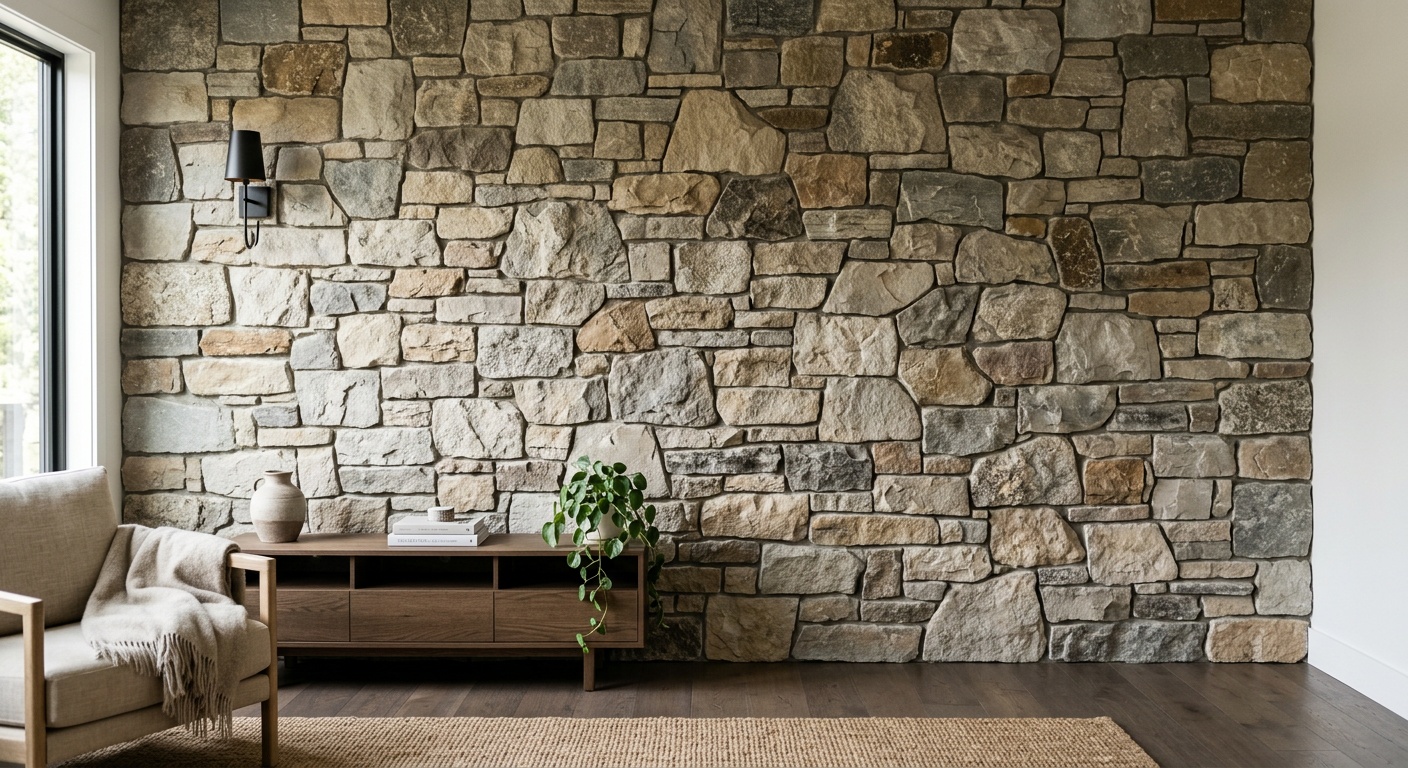
The living room is where interior stone walls have the most dramatic visual impact. The most classic application is a full-height fireplace surround, but in 2026, designers are pushing further. Consider a single accent wall behind a sofa or TV console running floor-to-ceiling with large-format stacked limestone or irregular slate. The key design principle here: let the stone breathe. Don’t crowd it with busy furniture or competing textures. Give it space to command attention.
Case Study: A Brooklyn brownstone renovation completed in late 2025 by Atelier Park Design featured a full living room wall in honed Jura limestone. The designers paired it with white oak floors, linen sofas in warm caramel tones, and minimal brass fixtures. The contrast between the cool limestone and the warm soft furnishings created what design media described as “architectural tension in the best possible sense.” The project was featured in Architectural Digest’s January 2026 issue.
Pro Tip: Use warm-toned lighting — specifically LED strips at 2700K–3000K color temperature — to wash a stone feature wall from above or below. This raking light technique dramatically enhances texture and depth, turning a flat wall into something that feels almost sculptural.
Kitchen Backsplashes and Accent Walls
Stone in the kitchen requires careful consideration of practicality. Your backsplash endures grease splatters, heat, and frequent wiping. For this reason, quartzite, slate, and properly sealed granite are your best natural stone choices here. Travertine, while beautiful, requires more vigilant sealing in high-moisture environments.
The subway tile backsplash has been replaced in aspirational kitchen design by more dramatic stone expressions. Think: full slab stone from countertop to ceiling, creating what designers call a “stone moment” — an uninterrupted vertical surface where the natural veining of a quartzite or marble-effect stone becomes the kitchen’s dominant artwork.
For a more budget-conscious approach, a stone veneer panel section behind the range creates a focal point without the expense of full stone throughout. Stack a 36-inch section of ledger-cut slate from countertop to the underside of cabinets and you’ll transform the entire kitchen’s character for under $800 in materials.
Bathroom Retreat Designs
The bathroom is arguably where stone reaches its highest design potential in 2026. The spa-wellness movement has made stone-clad bathroom walls genuinely aspirational. Travertine shower surrounds, slate accent walls behind freestanding tubs, and limestone vanity feature walls are all appearing in luxury renovations from Miami to Melbourne.
Key consideration: moisture management is everything in a stone bathroom. All natural stone must be sealed (typically every 1–3 years depending on porosity), grout lines should be sealed as well, and proper waterproofing behind the stone is non-negotiable. Cutting corners here will result in efflorescence, staining, and potentially mold.
Case Study: A Seattle hillside home renovation featured a master bathroom with a full travertine wet wall — floor, walls, and ceiling of the shower all clad in the same unfilled travertine. The continuity of material created an immersive, cave-like experience. The homeowners reported that guests routinely comment it’s the most memorable room in the house.
Bedroom Accent Walls
Stone in the bedroom is perhaps the most unexpected placement, and therefore the most impactful. A low-profile fieldstone or limestone wall behind a bed headboard brings warmth, texture, and a sense of being grounded. The material choice matters enormously here: stick to warmer, lighter stones (blonde limestone, warm travertine, sandy sandstone) rather than cold grays. The bedroom should feel restorative, not austere.
Installation Approaches: Real vs. Faux Stone
One of the most practical decisions you’ll face is whether to commit to natural stone, stone veneer, or manufactured alternatives. This isn’t purely an aesthetic question — it’s structural, financial, and logistical.
Natural stone walls require a structurally sound substrate capable of supporting significant weight (full stacked stone can weigh 80–150 lbs per square foot). In many cases, structural assessment by a qualified engineer is advisable before installation. You’ll need a skilled mason — not just a general contractor — and proper mortar, backing, and waterproofing systems. Budget 60–75% of total cost for labor on complex natural stone installs.
Thin stone veneer dramatically simplifies installation. At ¼ to ¾ inch thick, veneer weighs just 10–20 lbs per square foot and can typically be adhered directly to properly prepared drywall or cement board using a polymer-modified mortar. Many skilled DIY homeowners successfully install stone veneer themselves, though professional installation guarantees a more consistent result.
Manufactured stone veneer is the most installer-friendly option. Products like Eldorado Stone come with detailed technical documentation, clear installation systems, and consistent sizing that makes cutting and fitting predictable. Even motivated DIYers with basic tool skills can tackle a manufactured stone veneer accent wall in a weekend.
3D wall panels require only basic carpentry skills. Most panels connect with interlocking systems and can be glued or screwed to existing walls. They’re genuinely a one-day project for most accent walls.
Stone Wall Material Comparison
| Stone Type | Cost (Installed/sq ft) | Durability | DIY Feasibility | Best Rooms |
|---|---|---|---|---|
| Natural Limestone | $25–$65 | High (needs sealing) | Low – Professional recommended | Living room, bedroom |
| Travertine | $30–$80 | High (with maintenance) | Low – Specialist mason ideal | Bathroom, living room |
| Slate | $20–$50 | Very High | Moderate – Skilled DIY possible | Kitchen, bathroom, living room |
| Stone Veneer (Natural) | $15–$40 | High | Moderate-High – DIY friendly | All interior rooms |
| Manufactured Stone Veneer | $10–$30 | Moderate-High | High – Weekend DIY project | Living room, fireplace, entry |
Common Challenges and How to Overcome Them
Even the most beautiful stone wall project can go sideways without proper planning. Here are the three most common challenges homeowners face — and practical strategies to navigate each one.
Challenge 1: The “Cave Effect” — When Stone Makes a Room Feel Dark and Heavy
This is the most frequent complaint from homeowners who didn’t plan their stone wall project holistically. A dark slate or fieldstone wall in a north-facing room with small windows can make the space feel oppressive rather than dramatic.
Solution Strategy: Apply the 30/70 rule — let stone occupy no more than 30% of your total wall surface in smaller or lower-light rooms. Pair dark stone with light flooring (white oak, pale limestone tiles, or light-colored area rugs), white or off-white ceilings, and deliberate artificial lighting. Recessed spotlights angled at the stone wall, plus warm under-cabinet or shelf lighting, will counteract heaviness dramatically. If you’re committed to full-wall stone in a dark room, choose lighter stones — blonde limestone, ivory travertine, or light-toned quartzite — rather than dark slate or basalt.
Challenge 2: Moisture, Efflorescence, and Staining
Natural stone is porous. Without proper preparation and ongoing maintenance, moisture penetrates the stone, carrying mineral salts that crystallize on the surface as white, chalky deposits — a phenomenon called efflorescence. In bathrooms and kitchens especially, staining from water, soap, grease, and cleaning products is a genuine risk.
Solution Strategy: Never skip the sealer. Use a penetrating (impregnating) sealer rather than a surface sealer for natural stone interiors — it protects without changing the stone’s appearance. For bathroom and kitchen applications, use a cement board or schluter waterproofing system behind the stone, not directly on standard drywall. Re-seal stone walls annually in wet areas, and every 2–3 years in dry living spaces. Test your sealer’s efficacy periodically with the water bead test: if water no longer beads on the surface, it’s time to re-seal.
Challenge 3: Design Cohesion — Making Stone Feel Intentional, Not Grafted On
Perhaps the most common mistake in DIY stone wall projects is treating the stone wall as an isolated element rather than integrating it into the room’s full design narrative. A random stacked stone wall in an otherwise modern minimalist kitchen, for example, creates jarring visual discord.
Solution Strategy: Choose your stone material by working backward from your existing palette. Identify the three dominant tones in your room (flooring, main furniture, secondary accents) and select a stone that echoes at least two of those tones. For contemporary spaces, choose stones with consistent color and regular patterning (honed limestone, large-format slate). For rustic or organic spaces, irregular fieldstone, stacked ledger stone, or river rock creates appropriate texture. Bridge the stone and surrounding elements with complementary materials: brass or bronze fixtures echo warm stone tones; dark steel or matte black fixtures complement cool slates and quartzites.
Homeowner Satisfaction Ratings by Stone Wall Type (2025 Survey)
The following visualization represents data from a 2025 survey of 1,200 homeowners who completed interior stone wall projects, rating their overall satisfaction on a scale of 1–10.
Source: HomeAdvisor Interior Renovation Satisfaction Survey, 2025. n=1,200 homeowners, post-project ratings.
Your Stone Wall Transformation: A Practical Action Plan
You’ve absorbed the design principles, material options, and common pitfalls. Now it’s time to translate that knowledge into concrete action. Here’s your step-by-step roadmap to getting a stone wall project right — the first time.
- Define your “why” before your “what.” Ask yourself: Are you pursuing warmth and texture, dramatic focal-point impact, resale value, or a wellness-inspired sensory experience? Your answer will directly guide material selection and design direction. Write it down — it becomes your creative anchor when you inevitably face too many beautiful options.
- Audit your room’s existing conditions. Assess light levels (north vs. south facing), existing color palette, structural wall capacity, and moisture exposure. A professional structural assessment costs $200–$500 and can save you from a catastrophically expensive mistake if your walls can’t support full stone weight.
- Set a realistic budget with a 15% contingency. Stone projects consistently run over initial estimates due to material waste from cutting, unexpected substrate preparation needs, and labor time overruns. Budget transparently from the start.
- Source material samples before committing. Order physical samples of your top 2–3 stone choices and live with them in your room for at least 48 hours across different lighting conditions — morning light, midday, evening artificial light. Stone colors and textures shift dramatically under different light.
- Hire for the right skill level. Natural stone requires a qualified mason. Stone veneer can be handled by a skilled general contractor. Manufactured veneer can be DIY. Match your installer’s expertise to your material’s demands — not the other way around.
The broader trend is clear: as homes evolve into more intentional, sensory-rich environments in the post-pandemic era, materials that engage touch, sight, and emotion simultaneously — like natural stone — are only growing in relevance and value. Investing in an interior stone wall in 2026 isn’t just a design decision; it’s a long-term commitment to living in a space that genuinely moves you.
So here’s the question worth sitting with: When you walk into your home each day, does it feel like it reflects who you are and how you want to live — or does it feel like a placeholder? A thoughtfully chosen stone wall might be the single most transformative change you make this year.
Frequently Asked Questions
Can I install a stone wall over existing drywall without removing it?
For thin natural stone veneer and manufactured stone veneer products, installation over existing drywall is possible in many cases — but with critical caveats. The drywall must be structurally sound, flat, and free of moisture damage. For wet areas like bathrooms, you should always remove drywall and install cement board or a proper waterproofing membrane before stone application. For heavier full natural stone, drywall is never an adequate substrate alone; you’ll typically need to apply a metal lath and scratch coat over the drywall to create an appropriate bonding surface, and you must verify the wall framing can handle the added load.
How much maintenance do interior stone walls actually require?
Maintenance demands vary significantly by stone type and location. In dry living spaces (living rooms, bedrooms), sealed natural stone walls generally require nothing more than occasional dusting and resealing every 2–3 years. In wet environments like bathrooms and kitchens, more vigilant care is necessary: reseal annually, avoid harsh acidic cleaners (which etch stone surfaces), clean promptly after any spills, and inspect grout lines periodically for cracking or discoloration. Slate is naturally more resistant and requires the least maintenance. Limestone and travertine are more porous and demand the most consistent care. Manufactured stone veneer is the lowest-maintenance option overall.
Does an interior stone wall actually increase home resale value?
Yes — but with important nuances. According to the National Association of Realtors’ 2025 Remodeling Impact Report, high-quality interior stone features (fireplace surrounds, kitchen stone accent walls, bathroom stone wet walls) deliver an average cost recovery of 70–85% at resale, with some luxury market properties reporting full or above-cost returns. The key variables are quality, cohesion with the overall home design, and local market preferences. A beautifully executed travertine bathroom feature wall in a luxury market home adds genuine appraised value. A poorly matched manufactured stone veneer accent wall in a budget-market property may add little to no value. When in doubt, consult a local real estate appraiser before undertaking a significant stone wall project purely for resale purposes.
About the Author
